Fall is the right time to prepare your patio, walkways, retaining walls, steps, and other hardscaping for a Rhode Island winter. A little maintenance now can help you spot loose pavers, cracks, drainage problems, and damaged masonry before freezing temperatures arrive.
Rhode Island weather can be hard on outdoor surfaces. Rain, fallen leaves, freezing temperatures, snow, and ice all put added stress on stone and pavers. The goal of fall hardscape maintenance is simple: clean the area, check for damage, keep water moving, and repair problems that could get worse during winter.
Here is what Rhode Island homeowners should check before the colder months arrive.
Why Should You Check Hardscaping Before Winter?
Small hardscape problems can become more noticeable after a long New England winter. Water can enter cracks and spaces around masonry and pavers. When that water freezes, it expands and can put additional pressure on the surrounding materials.
Fall gives you a chance to find these problems before temperatures regularly fall below freezing. You can also see where water collects during fall rainstorms and address maintenance concerns before snow covers the area.
Focus on the outdoor spaces you use most, especially patios, front walkways, driveways, retaining walls, and steps.
Clear Leaves From Patios and Walkways
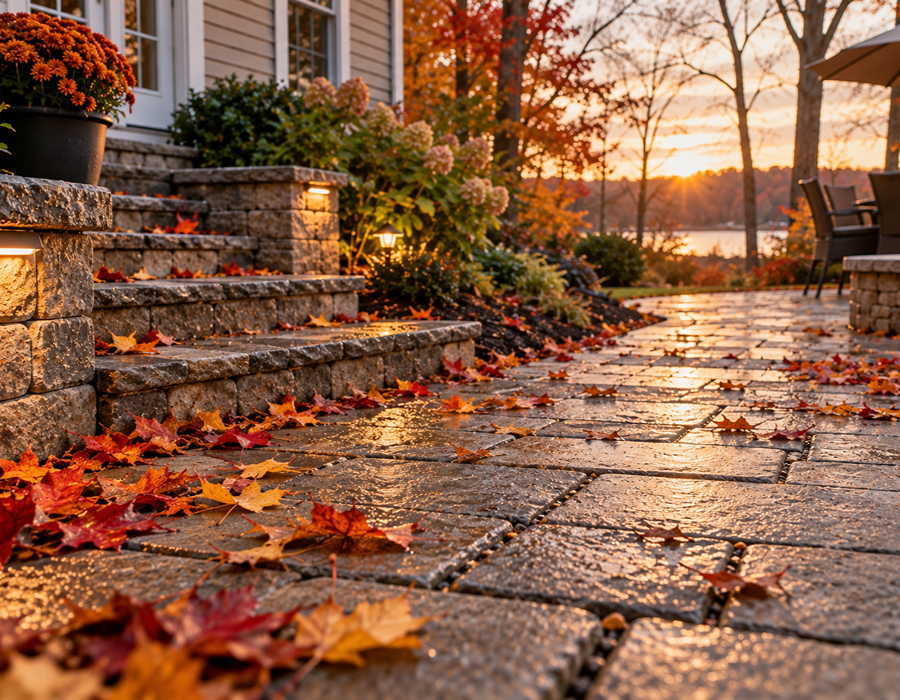
Falling leaves look harmless, but thick layers can hold moisture against your hardscaping. Wet leaves can also become slippery on patios, steps, and walkways.
Sweep or blow leaves away regularly instead of waiting until every tree is bare. Pay extra attention to corners, joints, steps, and areas along retaining walls where leaves tend to collect.
Your fall cleanup should include:
- Removing leaves from patios
- Sweeping walkways and steps
- Clearing debris from paver joints
- Removing sticks and branches
- Cleaning around retaining walls
- Keeping drainage areas open
Keeping the surface clear also makes it much easier to see cracks or other damage.
Look for Cracks Before Temperatures Drop
Fall is a good time to inspect stone, brick, concrete pavers, and other masonry for visible damage.
Look for cracks that were not there earlier in the year. You should also check for chipped edges, loose pieces, missing material, or sections that move when you step on them.
Water can enter damaged areas during rain or melting snow. Repeated freezing and thawing can then make an existing problem worse.
If you notice damaged stone or masonry, Landscape Solutions provides stone and masonry repair in Rhode Island. Having a problem evaluated before winter can help you understand whether it needs immediate attention.
Check Your Pavers for Movement
Walk slowly across your patio, driveway, and walkways. Pay attention to pavers that rock, move, sink, or sit higher than the surrounding surface.
An uneven paver may be more than an appearance problem. Raised edges can create trip hazards, while low areas can collect rainwater and melting snow.
Look for:
- Sinking pavers
- Raised edges
- Loose pavers
- Wider joints
- Missing joint material
- Sections moving outward
If you are already seeing movement in the fall, make a note of the area. It is worth checking again after winter to see whether anything has changed.
Watch Your Property During Heavy Fall Rain
One of the easiest ways to find hardscape drainage problems is to go outside after a good rain.
Look at your patio, walkways, steps, driveway, and areas around retaining walls. Water should not sit for long periods in large puddles or constantly collect in the same low spot.
Standing water can point to an uneven surface or another issue affecting how water moves through the property. That becomes more important as temperatures begin falling because the same wet areas may freeze.
When planning new hardscaping in Rhode Island, homeowners should think about more than how the finished project looks. Site conditions, preparation, materials, and long-term performance are also important.
Inspect Outdoor Steps Before Ice and Snow Arrive
Outdoor steps should feel solid and even before winter begins. Once snow and ice arrive, an already loose or uneven step can become more difficult to use safely.
Walk up and down your steps and pay attention to how they feel. Check the edges and sides for cracks, movement, or loose material.
Problems to watch for include:
- Rocking or loose stones
- Cracked masonry
- Uneven steps
- Broken edges
- Large new gaps
- Sections that appear to have moved
Landscape Solutions provides stone step and staircase installation for homeowners looking to replace or improve outdoor access around their property.
Give Your Retaining Walls a Fall Inspection
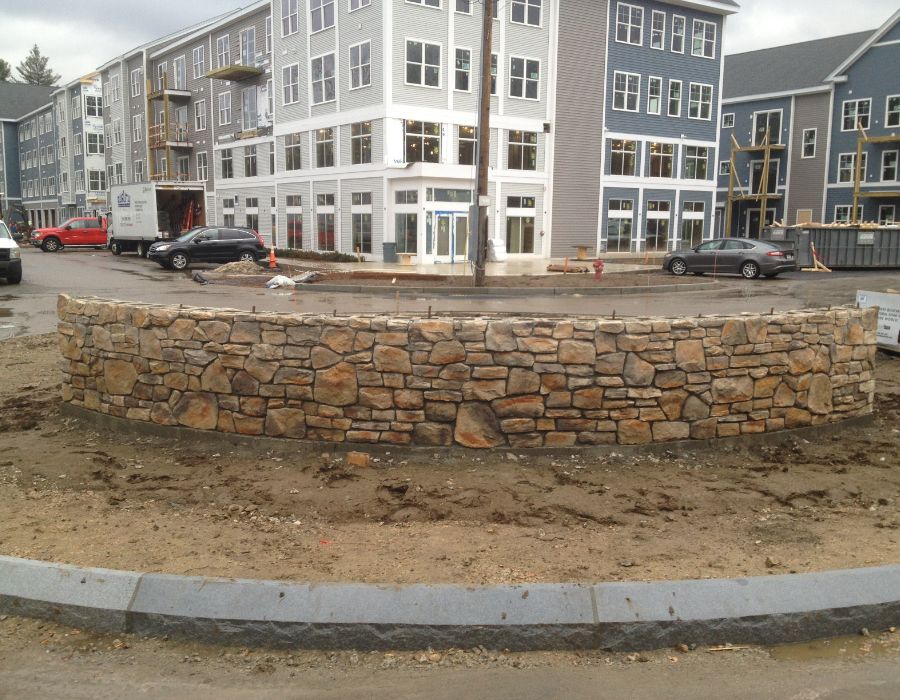
Retaining walls should also be checked before winter. Instead of looking only at individual blocks or stones, stand back and look at the wall as a whole.
Does it still appear straight? Have any sections started leaning? Are there new gaps or loose pieces?
Also look at the soil around the wall after heavy rain. Water and soil movement can place additional pressure on a retaining wall, making drainage and proper construction important.
Landscape Solutions has more information about retaining walls in Rhode Island, including when homeowners may need one and what goes into maintaining these outdoor structures.
Clean Your Patio Before Putting Furniture Away
Before covering or storing your patio furniture for winter, give the patio itself a good cleaning.
Sweep away dirt, leaves, grass clippings, and other debris. Check underneath planters and furniture because moisture and debris often collect in places that are covered throughout the summer.
This is also a good opportunity to inspect the entire surface while it is open. Look for low areas, stains, damaged pavers, and joints that appear empty.
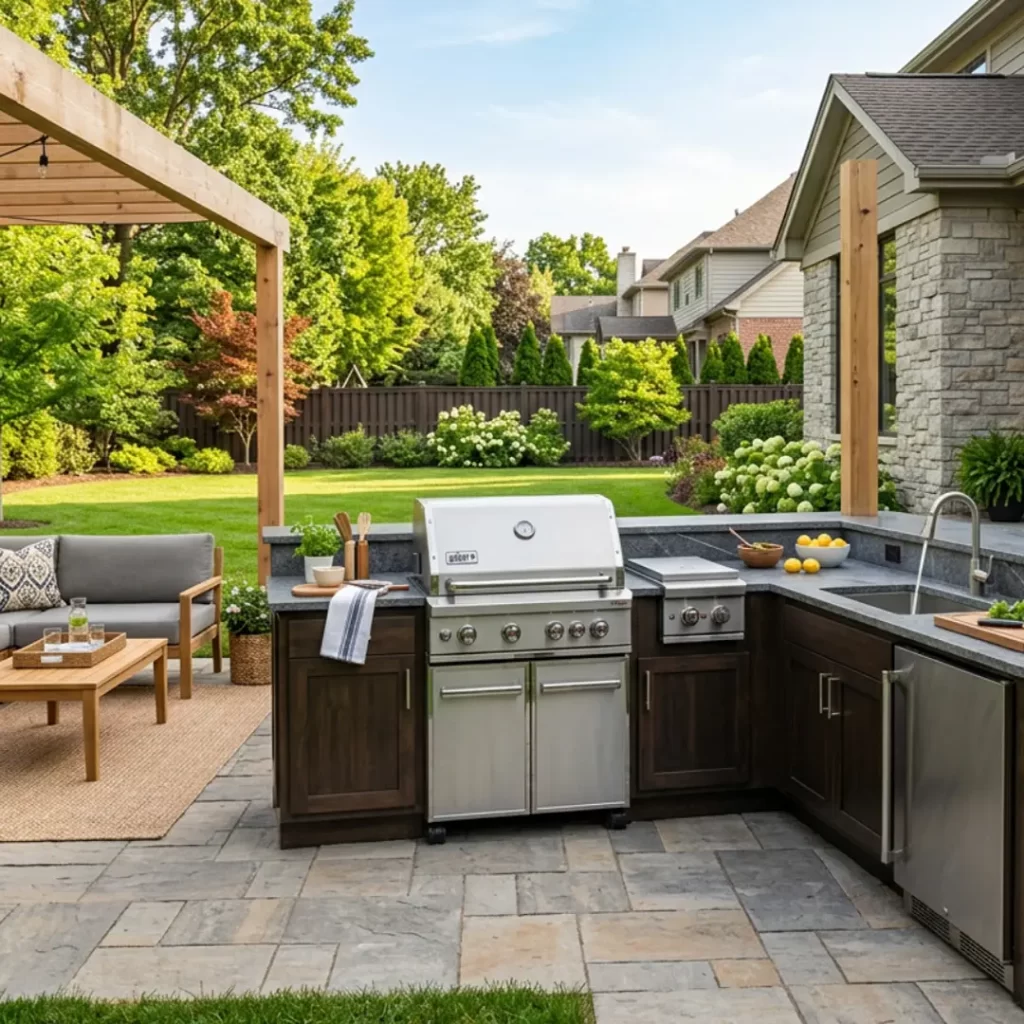
If your existing outdoor space no longer works well for your home, fall can also be a good time to begin planning a future patio installation. Planning ahead gives you time to think about size, layout, materials, and how you want to use the space.
Check the Edges of Walkways and Driveways
The center of a walkway or driveway gets most of the attention, but do not forget the edges.
Check where hardscaping meets lawn, mulch, planting beds, or soil. Look for areas where material has washed away or the edge has begun to move.
A clear edge also makes fall cleanup easier. Trim back grass and plants that are growing over walking surfaces before winter.
This helps keep paths easier to see and use once fallen leaves or light snow begin covering the ground.
Trim Plants Away From Hardscaping
Fall landscaping and hardscape maintenance often go together. Overgrown shrubs and plants can cover walkways, steps, walls, and other areas that need to remain clear.
Trim plants as appropriate for the species and remove dead growth from around outdoor surfaces. Keep mulch and loose soil from spreading across pavers.
Landscape Solutions provides both hardscaping and planting services, so its outdoor projects can include masonry as well as trees, shrubs, flowers, and mulch. Thinking about these areas together can help create an outdoor space that is easier to maintain throughout the year.
Be Careful With Ice Removal Products
Once winter arrives, homeowners naturally want to keep steps and walkways free from ice. However, it is important to consider the surface before applying any deicing product.
Not every product is appropriate for every type of stone, concrete, brick, or paver. Products should be selected and used according to the recommendations for the specific hardscape material.
You should also avoid damaging surfaces with aggressive ice removal. Metal tools and excessive force can chip or scratch some materials.
When possible, clear snow before it becomes packed down. This can make it easier to maintain safer walking areas without allowing thick layers of snow and ice to build up.
Do You Need to Seal Your Pavers Before Winter?
Not every hardscape needs to be sealed, and sealing should not be treated as a quick fix for damaged pavers.
The right choice depends on the material, condition, age, and type of installation. If a surface has drainage problems, loose pavers, or existing damage, those issues should be understood before applying a coating.
If you are unsure, find out what type of paver or stone you have and follow the manufacturer’s recommendations. A professional hardscape contractor can also help determine whether sealing makes sense for a particular surface.
What Hardscape Problems Should You Fix Before Winter?
Not every small imperfection requires immediate construction work. However, some problems are worth addressing before another season of freezing temperatures.
Consider having an area inspected if you notice:
- Loose outdoor steps
- Large masonry cracks
- Major paver movement
- A leaning retaining wall
- Repeated standing water
- Significant sinking
- Loose stone or masonry
- Unsafe walkway surfaces
The most important step is finding out why the problem is happening. Repairing only what you see may not provide a lasting solution if the cause is below or behind the surface.
Fall Is Also a Good Time to Plan Next Year’s Hardscaping
You do not need to wait until the first warm spring weekend to start thinking about your next outdoor project.
Fall gives homeowners time to look at what worked well during the summer and what did not. Maybe your patio needs more room. Perhaps the walkway to your front door is getting old, or a retaining wall could improve how part of your yard is used.
Think about:
- Patios and outdoor living areas
- Walkways
- Stone driveways
- Retaining walls
- Outdoor steps
- Masonry repairs
- Planting and landscaping improvements
Planning early gives you more time to make decisions instead of rushing through the process when warmer weather returns.
Your Fall Hardscape Checklist
Before Rhode Island moves into colder weather, give your outdoor spaces one final inspection.
A simple fall checklist includes:
- Remove leaves and debris
- Clean patios and walkways
- Check pavers for movement
- Look for masonry cracks
- Watch for standing water
- Inspect outdoor steps
- Check retaining walls
- Clear hardscape edges
- Trim back overgrown plants
- Identify repairs before winter
- Make note of projects for the coming year
You do not have to complete everything in one day. The goal is simply to know the condition of your property before snow and ice make problems harder to see.
Prepare Your Rhode Island Hardscaping for the Colder Months
Fall hardscape maintenance is about more than cleaning up leaves. It is your opportunity to find cracks, loose pavers, drainage concerns, damaged steps, and other problems before Rhode Island’s colder weather arrives.
A few minutes spent checking your patio, walkways, retaining walls, driveway, and outdoor steps can give you a much better idea of what needs attention now and what can wait.
Landscape Solutions is based in Cumberland, Rhode Island and provides landscape masonry and construction services for residential and commercial properties. Services include patios, stone driveways, walkways, retaining walls, steps and staircases, masonry repair, and planting and landscaping.
If you find damaged or aging hardscaping during your fall cleanup, contact Landscape Solutions at 401-742-0567 to request a free quote.