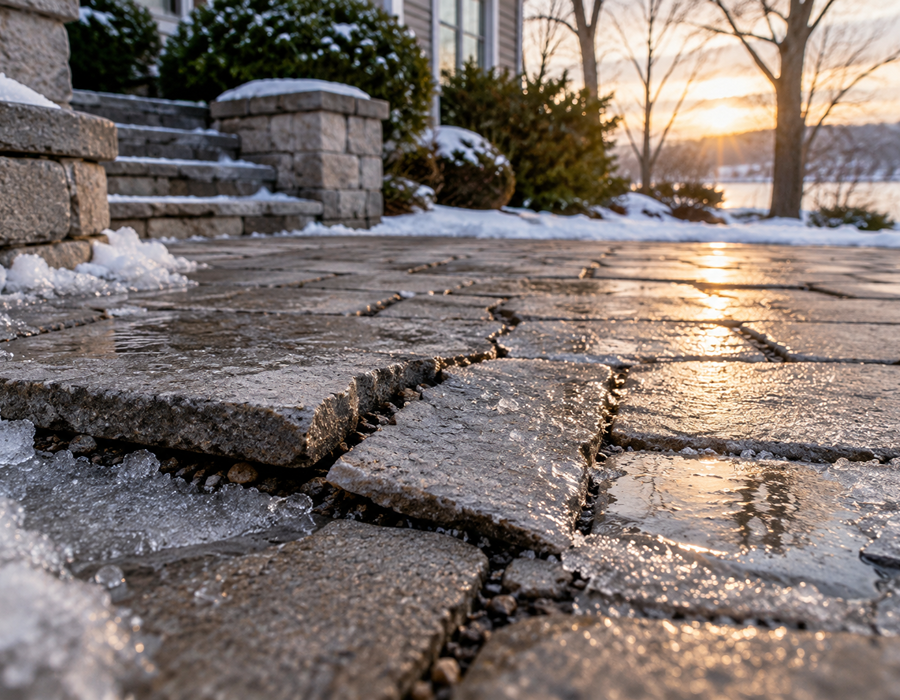
Freeze-thaw cycles can cause serious damage to patios, walkways, driveways, retaining walls, steps, and other hardscaping in Rhode Island. The problem starts when water gets into small cracks, joints, or spaces beneath the surface. When temperatures drop, that water freezes and expands. When it warms up, the ice melts, and the process can start all over again.
One freeze may not cause much trouble. But Rhode Island winters can bring many changes between freezing and warmer temperatures. Over time, that repeated movement can cause pavers to shift, masonry to crack, steps to become uneven, and retaining walls to move.
Understanding why this happens can help you spot problems early and protect your hardscaping before minor damage becomes a larger repair.
What Is a Freeze-Thaw Cycle?
A freeze-thaw cycle happens when the temperature moves above and below freezing. Water first enters the soil, joints, or small openings around your hardscaping. When the temperature falls below freezing, that water turns to ice and expands.
Once temperatures rise again, the ice melts. This leaves room for more water to enter the same area. If this happens many times during the winter, the repeated expansion and movement can slowly weaken the surface and the base underneath it.
This is one reason proper installation matters so much in New England. Rhode Island hardscaping needs to be built with changing weather in mind.
Why Rhode Island Hardscaping Is at Risk
Rhode Island gets cold winters, rain, snow, ice, and periods when temperatures move back above freezing. That mix creates the right conditions for freeze-thaw damage.
The problem is not always the cold itself. Water is often the bigger concern. If water cannot drain away from a patio, walkway, driveway, wall, or set of steps, it may collect in areas where freezing can cause movement.
Hardscaping that already has poor drainage, weak joints, cracks, or an unstable base may be more likely to show problems after winter. If you are planning a new project, understanding what goes into professional hardscaping services in Rhode Island can help you know what to look for before work begins.
What Does Freeze-Thaw Damage Look Like?
Freeze-thaw damage does not always appear as one large crack. Sometimes the first signs are small changes that are easy to overlook.
Common warning signs include:
- Pavers that have lifted or sunk
- New cracks in stone or masonry
- Wider gaps between pavers
- Loose stones or bricks
- Uneven walkways
- Steps that have shifted
- Water collecting in low areas
- Retaining walls that appear to lean or move
- Crumbling or chipped masonry
- Joints that are opening up
Take a look at your hardscaping after the winter and again in early spring. If something looks different from the previous year, it is worth paying attention to it.
Why Do Pavers Lift and Sink During Winter?
Pavers can move when the soil and base underneath them are affected by moisture and freezing temperatures. If water collects below the surface and freezes, it can push parts of the hardscape upward. This movement is often called frost heaving.
When the ground thaws, everything does not always settle back into the exact same position. A paver may remain slightly raised, tilted, or sunken. After several winters, these small movements can become much easier to see.
A strong, properly prepared base helps reduce this problem. Good drainage is also important because moving water away from the hardscape means there is less moisture available to freeze below it.
How Freeze-Thaw Cycles Affect Patios
A patio is made to provide a level and comfortable outdoor space. Freeze-thaw movement can change that by causing individual pavers or sections of the patio to move.
At first, you may notice a small low spot or a paver that rocks when stepped on. Over time, the area can become more uneven. Water may then collect in the low spot, which can make the freeze-thaw problem worse the following winter.
If you are considering a new patio, proper construction is just as important as choosing the style and material. Landscape Solutions provides patio installation in Rhode Island and works with homeowners to build outdoor spaces designed for long-term use.
How Winter Weather Damages Walkways
Walkways are especially important to inspect because even a small amount of movement can create an uneven walking surface. A raised paver or sunken section may become a trip hazard.
Walkways can also collect water if their slope changes. That water may freeze on the surface during cold weather, creating another safety concern. Problems can become worse when water repeatedly enters the base and freezes underneath the walkway.
After winter, walk the entire path and look at it from several angles. Check for movement, loose materials, cracks, and areas where water sits after rain.
What Happens to Outdoor Steps?
Outdoor steps need to stay stable and even because people depend on them for safe access to the home, patio, or yard. Freeze-thaw cycles can affect both the steps themselves and the ground supporting them.
Watch for:
- Loose stones
- Cracked masonry
- Uneven step heights
- Movement along the edges
- Gaps that were not there before
- Sections that rock or feel unstable
These issues should not be ignored. Landscape Solutions offers stone step and staircase installation for Rhode Island properties, with a focus on function, durability, and appearance.
Can Freeze-Thaw Cycles Damage Retaining Walls?
Yes. Retaining walls can also be affected by freezing temperatures, especially when water builds up in the soil around the wall.
Wet soil can freeze and expand. This can place additional pressure on a retaining wall. Repeated pressure may contribute to movement, cracking, or leaning, especially when an existing wall already has drainage or structural problems.
Retaining walls serve an important purpose because they can help hold soil in place and manage changes in elevation. Landscape Solutions has additional information about retaining walls in Rhode Island for homeowners who want to learn more about their construction, styles, and maintenance.
Why Drainage Matters So Much
Water and winter weather are a bad combination for poorly drained hardscaping. If water has nowhere to go, it can settle beneath or beside a hardscape feature.
Good drainage helps move water away before it freezes. The exact drainage needs depend on the property, slope, soil, and type of project. This is why drainage should be considered during the planning and installation process instead of after a problem appears.
A hardscape may look great on top, but the work below the surface is just as important. The base, grading, compaction, and drainage all play a role in how the finished project performs over time.
Why the Base Under Your Hardscaping Matters
Most homeowners only see the finished stone, brick, or paver surface. However, much of a hardscape’s strength comes from what is underneath it.
The base needs to provide stable support while also dealing with moisture and ground movement. If the base is not prepared correctly, parts of the surface may move differently as the ground freezes and thaws.
This can lead to:
- Sinking
- Heaving
- Uneven surfaces
- Open joints
- Poor drainage
- Movement along edges
This is why a professional hardscaping project involves much more than placing pavers or stone. Proper preparation helps create a stronger finished surface that is better suited for Rhode Island weather.
Are Some Hardscape Materials Better for Rhode Island Winters?
Material matters, but there is no single material that makes poor installation disappear. Natural stone, concrete pavers, brick, and other masonry products each have different characteristics.
The right choice depends on where the material will be used, the design of the property, maintenance expectations, and the way the project is built. Homeowners should think about the entire system instead of choosing a material based only on appearance.
Landscape Solutions works with a range of hardscaping materials for its masonry and construction projects. The company also holds an Interlocking Concrete Pavement Institute Certified Installer credential and has experience in stone masonry, hardscaping, construction, and landscape design.
Can Small Cracks Become Bigger After Winter?
They can. A small opening gives water a place to enter. If that water freezes, expansion may place additional stress on the surrounding material.
The crack may slowly grow after repeated freeze-thaw cycles. Loose mortar, chipped areas, and open joints can experience similar problems.
This does not mean every tiny crack requires a major repair. It does mean that changes should be watched. Catching a developing masonry problem early can sometimes keep the affected area from becoming more difficult to repair.
When Should You Inspect Your Hardscaping?
Early spring is a good time to inspect your property because winter damage is easier to see once the snow and ice are gone. You can also check the area after a heavy rain to see where water collects.
Walk around your property and look closely at:
- Patios
- Walkways
- Stone driveways
- Retaining walls
- Outdoor steps
- Masonry features
Compare different sections and look for anything that seems uneven, loose, cracked, or out of place. It is also smart to check again before winter so existing problems are not left exposed to another season of freezing and thawing.
Should You Repair Freeze-Thaw Damage or Replace the Hardscape?
It depends on the amount of damage and what caused it. A few loose or uneven pavers may be a smaller repair. Widespread movement, major cracking, or a failing base can require more work.
The important part is finding the cause. Simply fixing what you can see may not solve the problem if water, drainage, or the base underneath the hardscape caused the damage.
Professional stone and masonry repair can help address damaged outdoor masonry while protecting the appearance and function of the existing structure. An experienced contractor can look at the affected area and help determine what type of work makes sense.
How Can You Help Protect Hardscaping From Winter Damage?
You cannot stop Rhode Island temperatures from changing, but you can keep an eye on conditions that may make damage worse.
A few simple steps include:
- Keep drainage areas clear of leaves and debris.
- Watch for standing water near hardscaping.
- Repair developing masonry problems before they spread.
- Check for loose or shifting pavers.
- Inspect steps and walkways for uneven areas.
- Pay attention to changes in retaining walls.
- Have larger problems inspected before another winter.
For new construction, choose a contractor who understands the demands of New England weather. Base preparation, materials, drainage, and careful installation all matter when building a hardscape that will face years of Rhode Island winters.
Professional Hardscaping for Rhode Island Properties
Hardscaping in Rhode Island has to handle more than everyday foot traffic. Patios, driveways, walkways, walls, and steps are exposed to rain, snow, ice, summer heat, and repeated winter freezes.
Landscape Solutions is based in Cumberland and provides landscape masonry and construction services for residential and commercial properties. The company has over 15 years of experience in landscape masonry and construction and provides services including patios, walkways, stone driveways, retaining walls, steps and staircases, and masonry repair.
Whether you are dealing with an existing hardscape problem or planning something new, proper construction can make a major difference in how your outdoor space performs through the seasons.
Protect Your Hardscaping Before Small Problems Grow
Freeze-thaw cycles are a normal part of winter in Rhode Island, but the damage they leave behind should not be ignored. Water can get below or inside hardscaping, freeze, expand, and slowly cause pavers, stone, masonry, and supporting materials to move.
Checking your property each spring can help you catch cracked masonry, uneven pavers, shifting steps, and retaining wall movement early. When repairs or replacement are needed, addressing the underlying cause is just as important as fixing the visible damage.
If you have noticed winter damage around your property, contact Landscape Solutions in Cumberland, RI at 401-742-0567 or request a free quote. The team can help you evaluate your existing hardscaping and determine the right next step for your property.