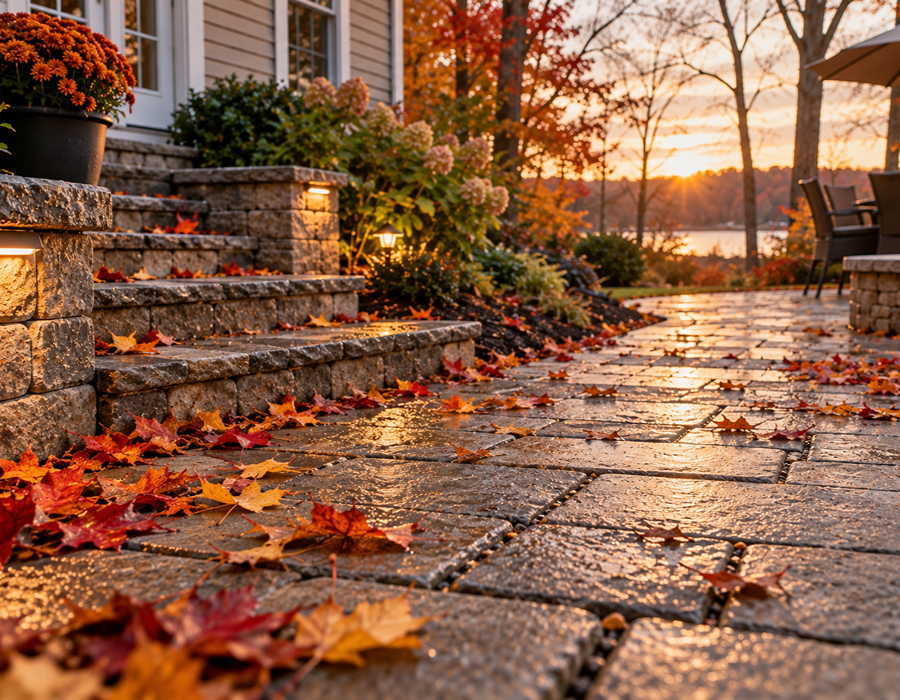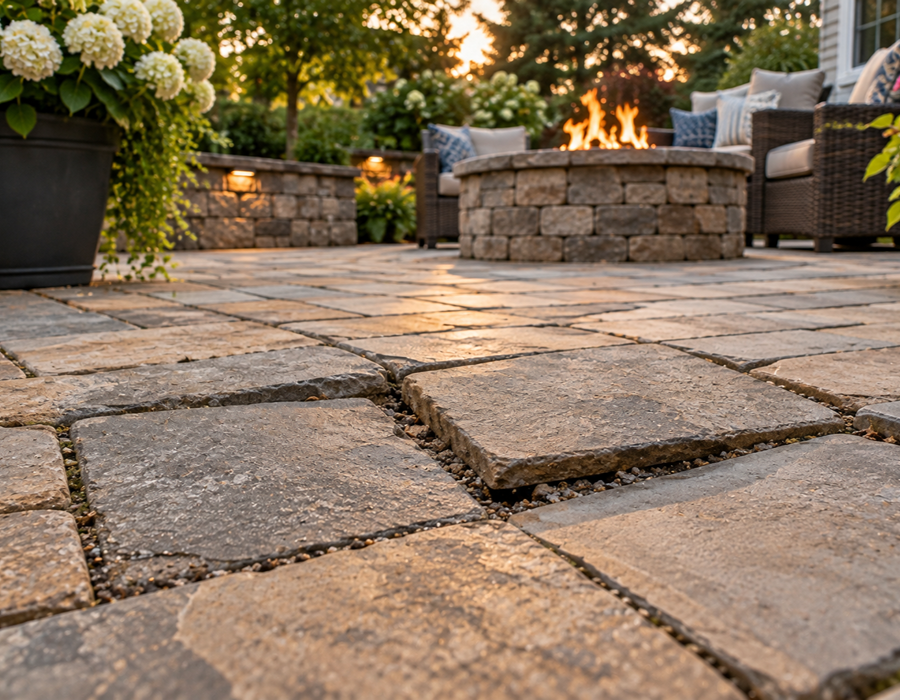
If your patio, walkway, or driveway pavers are sinking or shifting, the problem is often below the surface. Poor base preparation, water, soil movement, drainage problems, and Rhode Island’s freeze-thaw cycles can all cause pavers to move over time.
A small low spot may not seem like a big problem at first. But once pavers begin moving, water can collect in the area and make the problem worse. Uneven pavers can also create trip hazards and take away from the appearance of your outdoor space.
The good news is that sinking pavers do not always mean you need to replace the entire hardscape. Finding the cause is the first step toward deciding whether the area can be repaired or needs more extensive work.
Why Do Pavers Sink?
Pavers usually sink because something underneath them has changed. The stone and sand below the finished surface are what give a patio, walkway, or driveway its support. If that base settles, washes away, or was not prepared correctly, the pavers above it can move too.
Some of the most common causes include:
- Poor base preparation
- Improper compaction
- Water below the pavers
- Drainage problems
- Soil settlement
- Freeze-thaw cycles
- Failed or loose edging
The exact cause is not always clear from looking at the surface. That is why fixing a few crooked pavers without checking underneath them may only provide a temporary solution.
A Weak Base Can Cause Pavers to Settle
A strong hardscape starts long before the pavers are installed. The ground must be prepared and the base needs to provide even support across the project.
If part of the base is softer than another section, it may settle at a different rate. This can leave one part of a patio or walkway lower than the rest.
Base preparation is one of the reasons professional installation matters. Homeowners considering a new outdoor project can learn more about what goes into choosing hardscaping services in Rhode Island before deciding how to approach the work.
Water Is One of the Biggest Problems for Hardscaping
Water can cause trouble when it gets below a patio, walkway, or driveway and does not drain properly. It may slowly wash away or weaken the material supporting the pavers.
Once a low spot forms, rainwater may begin collecting there. That creates a cycle where the low area receives even more water and may continue to settle.
Watch your hardscaping during or shortly after a heavy rain. Areas where water repeatedly collects can provide an early clue that something is wrong with the surface, slope, or materials below it.
Rhode Island Winters Can Make the Problem Worse
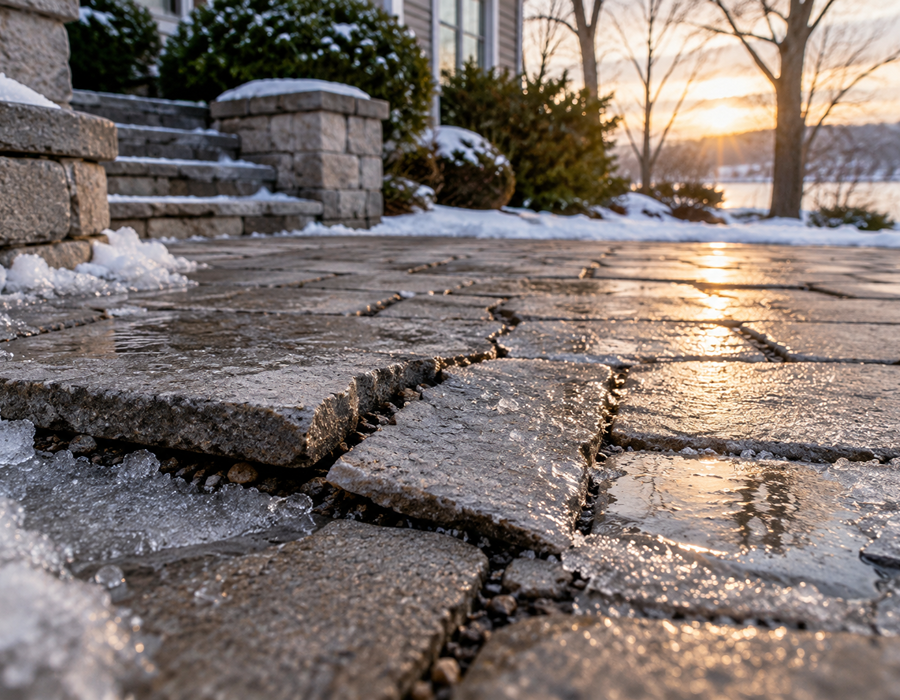
Rhode Island’s winter weather puts outdoor surfaces through repeated changes. Water can enter the ground or spaces below hardscaping and then freeze when temperatures drop.
Frozen water expands. When temperatures rise again, the ice melts and the ground begins to settle. Repeated freezing and thawing can contribute to movement when a hardscape already has moisture or base problems.
You may notice this movement most clearly in the spring. A patio or walkway that looked level in the fall may have a raised edge, sunken paver, or wider joint after winter.
Why Are Only a Few Pavers Sinking?
When only one small area is sinking, there may be a problem directly below that section. The base could have settled, soil may have moved, or water could be entering that particular spot.
This is often different from a patio where the entire surface is uneven. A small affected area may be easier to correct if the surrounding base is still stable.
Do not assume that adding more sand over the top will fix the problem. The cause is usually underneath the paver, so that is where the repair needs to be addressed.
Why Are My Pavers Moving Apart?
Pavers can also shift sideways instead of sinking. When this happens, the joints may become wider and the original pattern can begin to look uneven.
Movement can happen when the edges of the hardscape no longer provide enough support. It may also occur when the base moves or nearby soil washes away.
Early warning signs include:
- Joints getting wider
- Pavers turning slightly
- Edges moving outward
- Loose border pavers
- Sand disappearing from joints
- Sections no longer lining up
A few small changes can become much more noticeable over time. Checking your patio or walkway each spring can help you spot movement early.
Why Does My Paver Patio Have Low Spots?
A low spot usually means part of the surface has settled more than the area around it. The bigger concern is what happens next.
Water naturally moves toward lower areas. If rain begins collecting in the dip, more moisture can reach the base below. That can make an existing settlement or drainage issue worse.
If you are planning a new outdoor living area, proper construction from the beginning can help reduce these problems. Landscape Solutions provides professional patio installation in Rhode Island using materials such as concrete pavers and natural stone. The company also holds an Interlocking Concrete Pavement Institute Certified Installer credential.
Can Sinking Pavers Create a Safety Problem?
Yes. Uneven pavers are more than an appearance issue.
A raised edge can become a trip hazard on a walkway, patio, or set of outdoor steps. Low spots can also hold water that may freeze during colder weather and create slippery areas.
Pay extra attention to surfaces people use every day, including:
- Front walkways
- Paths leading to doors
- Patio entrances
- Outdoor steps
- Driveways
- Areas around gates
If a paver has moved enough that you regularly catch your foot on it, it is worth having the area looked at.
Can Tree Roots Move Pavers?
Trees and large shrubs can sometimes affect nearby hardscaping as their roots grow. A root close to the surface may push a paver upward instead of causing it to sink.
This is why landscape planning and hardscape planning should work together. Trees, shrubs, patios, walkways, and walls all share the same outdoor space and can affect one another over time.
Landscape Solutions provides both hardscaping and planting and landscaping services, including tree and shrub planting. Thinking about the entire yard during the planning stage can help create a more practical outdoor space.
Can You Fix Sinking Pavers Without Replacing Everything?
Sometimes. A small section of sinking or uneven pavers may be repairable without replacing the entire patio or walkway.
The affected pavers may need to be removed so the material underneath can be inspected. The base can then be corrected as needed before the pavers are reset.
A larger repair may be needed when:
- Many areas are sinking
- Water constantly pools on the surface
- The base is failing across a large section
- Pavers continue moving after previous repairs
- The surface has become unsafe
- Edges are spreading or failing
The important part is fixing the reason the pavers moved. Resetting them without addressing the base, soil, or water problem can allow the same issue to return.
When Is Masonry Repair the Better Option?
Not every damaged outdoor surface needs to be torn out and replaced. Existing stone and masonry can often be evaluated to determine whether a targeted repair makes more sense.
Cracks, loose stones, shifting sections, and other damage should be inspected before the problem becomes larger. The right solution depends on what is damaged and why it happened.
Landscape Solutions provides stone and masonry repair in Rhode Island for existing outdoor masonry. Repairing a problem early may help preserve more of the existing structure and keep the outdoor area safe and usable.
How Can You Prevent Pavers From Sinking?
There is no way to stop all ground movement, rain, or winter weather. However, a properly planned and installed hardscape is better prepared to handle normal Rhode Island conditions.
Good hardscape construction should consider:
- Ground preparation
- Base materials
- Proper compaction
- Drainage
- Surface slope
- Edge support
- The type of paver or stone
- How the area will be used
These details may not be the first things you notice when looking at a finished patio. They are still some of the most important parts of the project.
Should You Repair Pavers Yourself?
A homeowner may be able to reset an individual loose paver. The problem is knowing why it moved in the first place.
If you only level the surface but leave a drainage or base problem underneath, the paver can move again. Larger sections also require careful grading so the repaired area works with the surrounding surface.
This is similar to other types of masonry work. Landscape Solutions has previously explained some of the differences between professional masonry repair and DIY repairs, including why finding the source of the damage matters.
When Should You Call a Hardscape Contractor?
You should consider having your hardscaping inspected when the surface continues to move, has several low spots, holds water, or has become difficult to walk on.
A contractor can look beyond the pavers themselves. The goal is to determine whether the issue involves the base, drainage, soil, edges, or another part of the installation.
This is especially useful when you are unsure whether you need a small repair or a larger rebuild. Getting an experienced opinion can help you avoid spending money on a surface-level fix that does not solve the real problem.
Check Your Hardscaping Every Spring
Spring is one of the best times to walk around your property and look for changes. Snow has melted, the ground is thawing, and winter-related movement is often easier to see.
Look across patios and walkways from several angles instead of only looking straight down. This can make small dips and raised areas easier to spot.
You should also check after a heavy rain. Standing water can show you exactly where a surface has settled or where drainage may need attention.
Sinking Pavers Usually Point to a Bigger Issue
A sinking paver is often a symptom rather than the full problem. The real cause may be a weak base, moving soil, poor drainage, water below the surface, or winter weather.
Catching the problem early can help prevent a small uneven area from spreading. It can also make patios, driveways, and walkways safer and more comfortable to use.
Landscape Solutions provides landscape masonry, hardscaping, and construction services from its Cumberland, Rhode Island location, including patios, stone driveways, walkways, retaining walls, steps, and masonry repair. The company has over 15 years of experience in landscape masonry and construction and serves Cumberland and surrounding Rhode Island communities.
If your pavers are sinking, shifting, or becoming uneven, contact Landscape Solutions at 401-742-0567 to request a free quote and find out what may be causing the problem.